The Ginkgo Tree and me…
Synchronicity /sĭng″krə-nĭs′ĭ-tē, sĭn″-/, noun
(1) The state of being synchronous or simultaneous.
(2) Coincidence of events that appear meaningfully related but do not seem to be causally connected (Jungian theory).
In September, shortly after our return from Greece, I read a post on The Marginalian (themarginalian.com), a blog I visit frequently. The post was titled “How Humanity Saved the Ginkgo”—an excellent piece that I highly recommend. After reading it, I realized I had never seen a Ginkgo tree, or if I had, I did not recognize it. I became determined to find one.
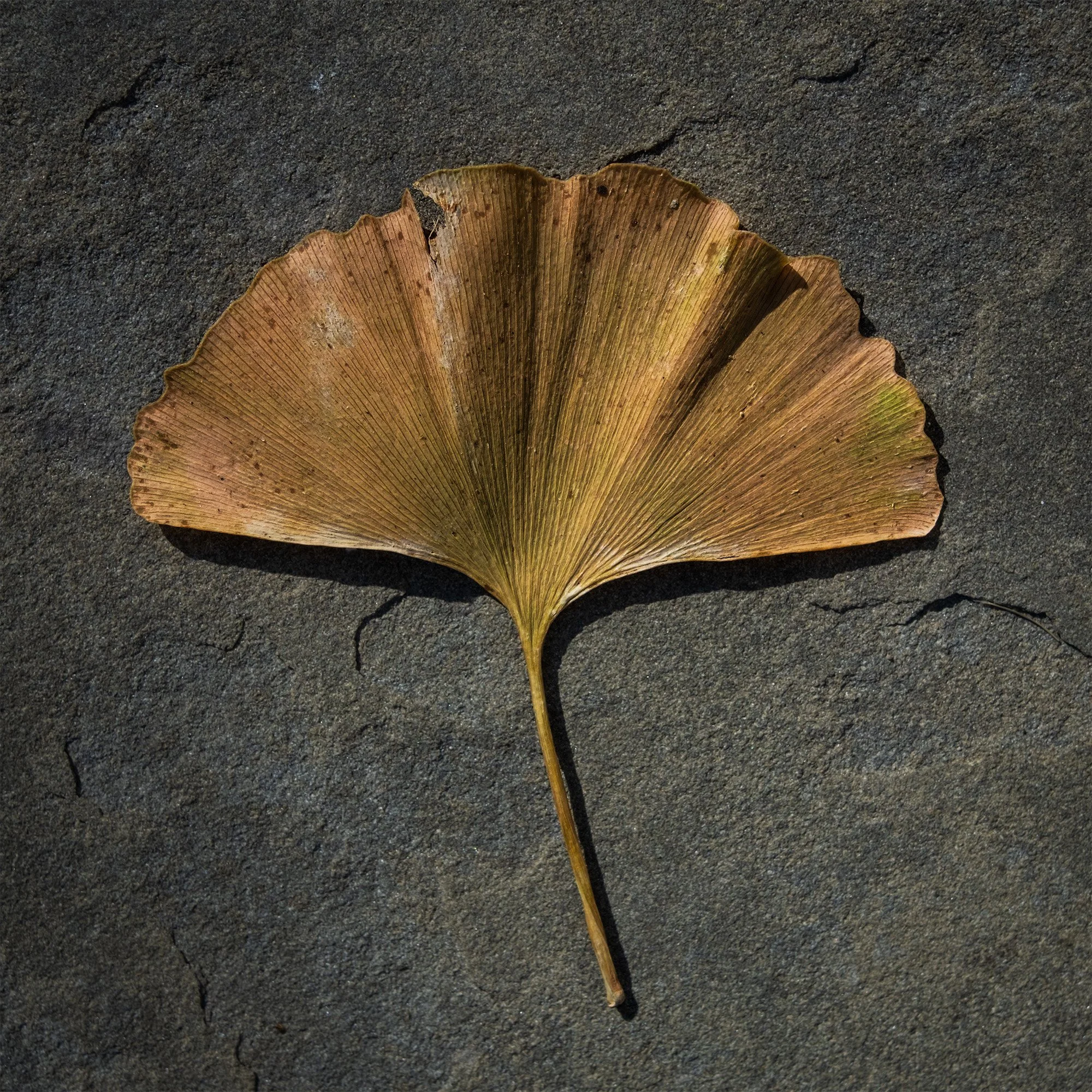
My first thought was that Roger Williams Park in Providence was the most likely place. The park's website listed a Ginkgo on its map of notable trees. Several days later, I went to the park, determined to find it. Being September, most trees were either in full autumnal colors or bare. I thought the Ginkgo’s distinct leaf shape and bright yellow autumn color would make it easy to spot. Still, I couldn't find it. Had the location been wrong on the map, or had the tree died? I gave up.
Then, in early October, on a photo walk with fellow members of the Rhode Island Center for Photographic Arts in New Bedford, MA, I discovered a Ginkgo leaf on the pavement as we wandered the streets. I was walking with my friend and fellow photographer, Donald, a New Bedford resident, and we searched the area where I had found the leaf for a Ginkgo tree—we did not find one. We gave up. When I spoke about our find over lunch with the other participants of the photowalk, David, the RICPA Managing Director, told me about several Ginkgo trees up the hill from the photo center on the Brown University campus.
Determined, the next week I walked up the hill and found Ginkgo leaves even before reaching the campus. I quickly realized they lined the streets along the edge of the Brown main quadrangle, there were Ginkgos near the medical school where I work, and there were even Ginkgos in an apartment complex near my home. The Ginkgo was far more common than I'd imagined; it was only my unfamiliarity with the species that made it challenging to find. I'd found the tree, understood it a little more, and thought that was the end of it.

But then Therese's acceptance package arrived for her MFA at Cedar Crest College in Allentown, PA. Inside were a T-shirt and a sweatshirt—and the college logo included a Ginkgo leaf! But wait, that is not the end of this long string of synchronicity.
Just yesterday, I started re-reading Lisa Hart's novel, Jade Dragon Mountain, a favorite of mine that I have read several times before. It's set in early 18th-century China, and a scene I'd never paid much attention to before features an English Franciscan monk being led to a Ginkgo tree—something he'd long dreamed of seeing. Was all this just a random, unconnected series of events? Or was it the construct of some higher power—perhaps akin to the Jungian theory of mind and matter mentioned earlier? I don't know the answer, but the pattern felt destined and made for an interesting journal entry.